

Marble is easy to recognise, but there’s quite a lot going on behind its colour and distinctive veining.
It’s a natural stone formed over a very long period of time, with its appearance shaped by the minerals present as it develops. This is why one piece of marble can look noticeably different from another, even when they come from the same type of stone.
If you’re considering marble furniture, it helps to understand where the material comes from, why it varies and what it’s actually like to live with.
What is marble?
Marble is a metamorphic rock. Most marble starts life as limestone, which is made mainly from calcium carbonate.
Deep within the Earth, limestone can be exposed to high levels of heat and pressure. Over time, this causes the calcite crystals within the limestone to recrystallise and form a new structure. This geological process is called metamorphism.
The stone doesn’t melt during this process. Its existing mineral structure changes, eventually producing the dense, crystalline material we know as marble.
Once quarried, marble can be cut into slabs and shaped, finished and polished for use in buildings, interiors and furniture.
What is marble made of?
Marble is mainly made from calcite, a crystalline form of calcium carbonate. Its exact composition depends on the original stone and the conditions in which it formed.
Other minerals can be present too, including quartz, mica and iron oxides. These play a role in the colours and markings found in different types of natural marble.
So while white marble may be the first thing that comes to mind, marble certainly isn’t always white.
How does marble get its colour and veining?
The colour and pattern of marble come from its mineral composition and the geological conditions in which it formed.
Relatively pure calcite marble can be pale or white. Other minerals and impurities within the original stone can create greys, creams, browns, greens and much darker tones.
They can also contribute to the veins, streaks and less regular markings running through the finished stone.
There can be a surprising amount of variation within a single type of marble. One slab might have a few strong veins, while another has finer markings spread across the surface. The background colour and concentration of the pattern can vary too.
These aren’t printed or manufactured patterns. They’re features within the stone itself, which is why it’s impossible for every piece of natural marble furniture to look exactly the same.
We cover this in more detail in our guide to Understanding Natural Marble Variation.
Where does marble come from?
Marble is quarried in many parts of the world. Italy is particularly well known for it, especially the marble quarried around Carrara, but significant deposits are found across countries including Greece, Turkey, Spain, India and China.
The country a marble comes from doesn’t tell you everything about the stone.
Different quarries within the same region can produce marble with very different colours, patterns and characteristics. Even within a single quarry, the appearance of the stone can change depending on the area being worked.
For furniture, the individual marble and how it works with the design are generally more useful things to consider than the country name alone.
Marble through history
People have been building and creating with marble for thousands of years.
The ancient Greeks used it extensively for temples and sculpture. The Romans later sourced marble from different parts of their empire for buildings, columns, floors and decorative work.
There were good reasons for using it. Marble can be cut and carved in detail, and polishing the surface brings out the colour and pattern of the stone.
Modern cutting and manufacturing methods are very different, of course, but many of the qualities that made marble useful historically still apply. It’s a material that can be shaped into quite precise forms without losing the natural variation that makes the stone interesting in the first place.
Why is marble used for furniture?
Furniture allows the natural pattern of marble to become a visible part of a room without needing to use it across an entire floor or wall.
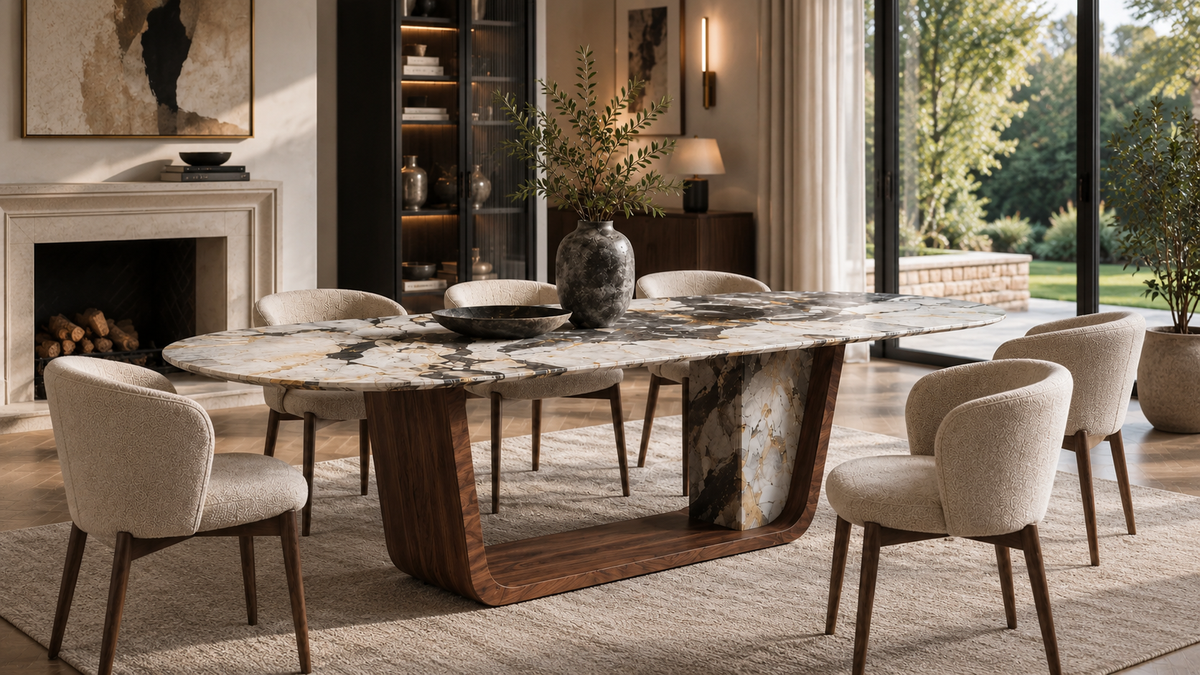
A marble dining table gives you a large area of uninterrupted stone, so the veins and changes in tone are particularly noticeable. With a marble coffee table or side table, the same characteristics are present on a smaller scale.
Marble also has a substantial feel. Even relatively simple furniture designs can feel quite different when they’re made using a solid natural material rather than a manufactured imitation.
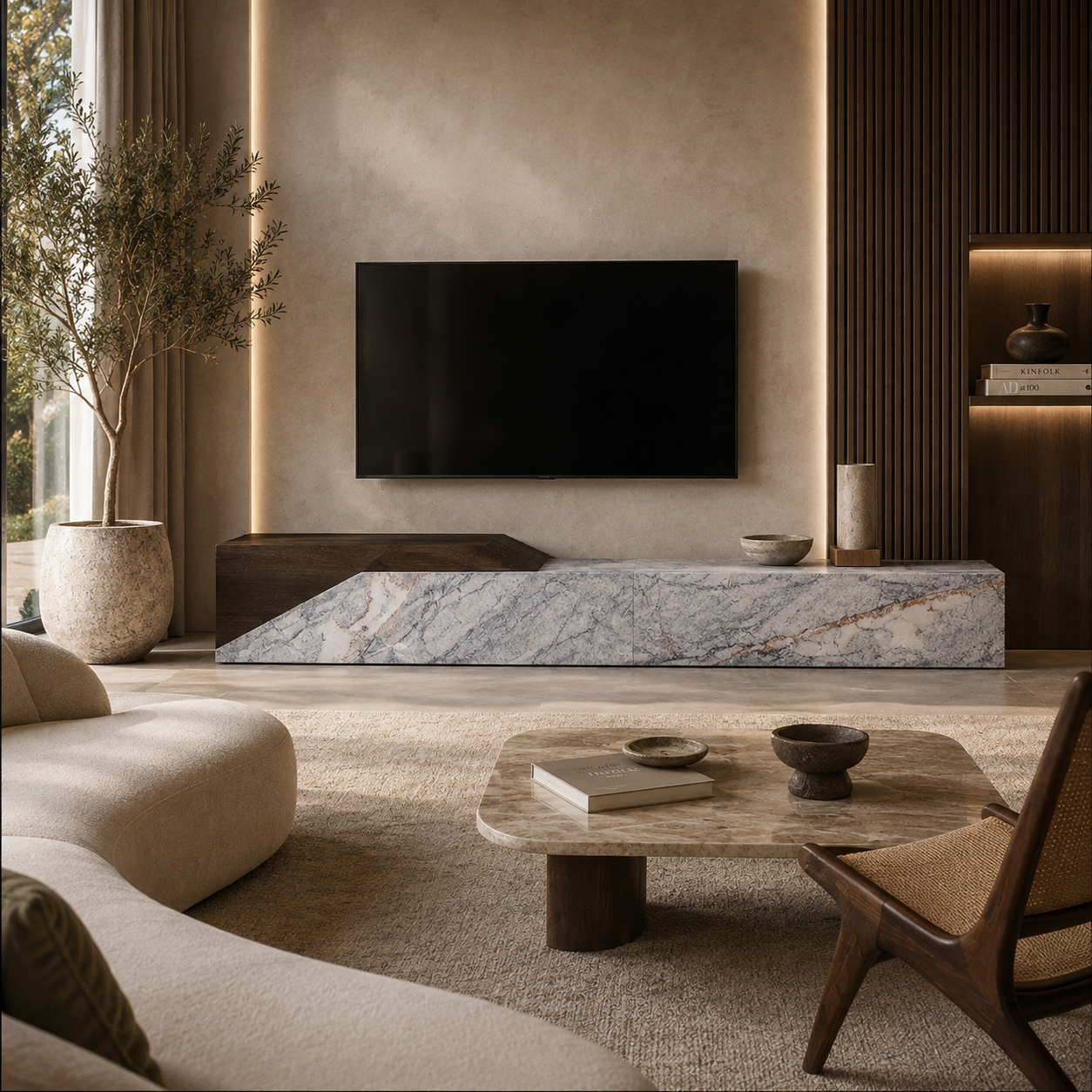
We particularly like pairing marble with wood. The two materials are very different, but both have natural variation. Marble brings its own veining and tonal changes, while wood has differences in grain, texture and colour.
A number of pieces in The Marble & Wood Co. collection use this combination rather than trying to make either material look completely uniform.
Is natural marble perfect?
Natural marble isn’t a perfectly consistent material, and it shouldn’t be expected to be.
The position, direction and thickness of veins can change. There may be lighter and darker areas, along with markings that are specific to that section of stone.
This means a piece of natural marble furniture won’t necessarily have the exact pattern shown in a product photograph. The photograph shows the overall type and colour of the marble, but another piece cut from the stone will have its own arrangement of veins and markings.
Marble needs some care in everyday use too.
Because it’s largely made from calcite, acidic substances can react with the surface and cause etching. Lemon juice, vinegar and some household cleaning products are common examples. Marble can also be susceptible to staining and scratching, depending on the finish and how it’s treated.
It’s sensible to use coasters and placemats, clean up spills promptly and avoid harsh or acidic cleaning products.
Choosing natural marble furniture
Start with the overall colour and character of the marble rather than looking for an exact pattern.
Think about how much stone the piece will introduce into the room. A large marble dining table will naturally have more visual impact than a small side table, particularly if the marble has strong veining.
The other materials and colours in the room matter too. Wood flooring, existing furniture, upholstery and wall colours can all change how a marble looks once it’s in place.
Most importantly, expect some natural variation. If you’re choosing genuine marble, the piece that arrives won’t be an exact copy of every photograph you’ve seen.
That’s simply the nature of the material. Each section of marble has its own pattern, formed long before it became a piece of furniture.
You can explore The Marble & Wood Co. collection of natural marble furniture, including dining tables, coffee tables and pieces combining natural marble with wood, on our website.

Leave a comment
This site is protected by hCaptcha and the hCaptcha Privacy Policy and Terms of Service apply.