
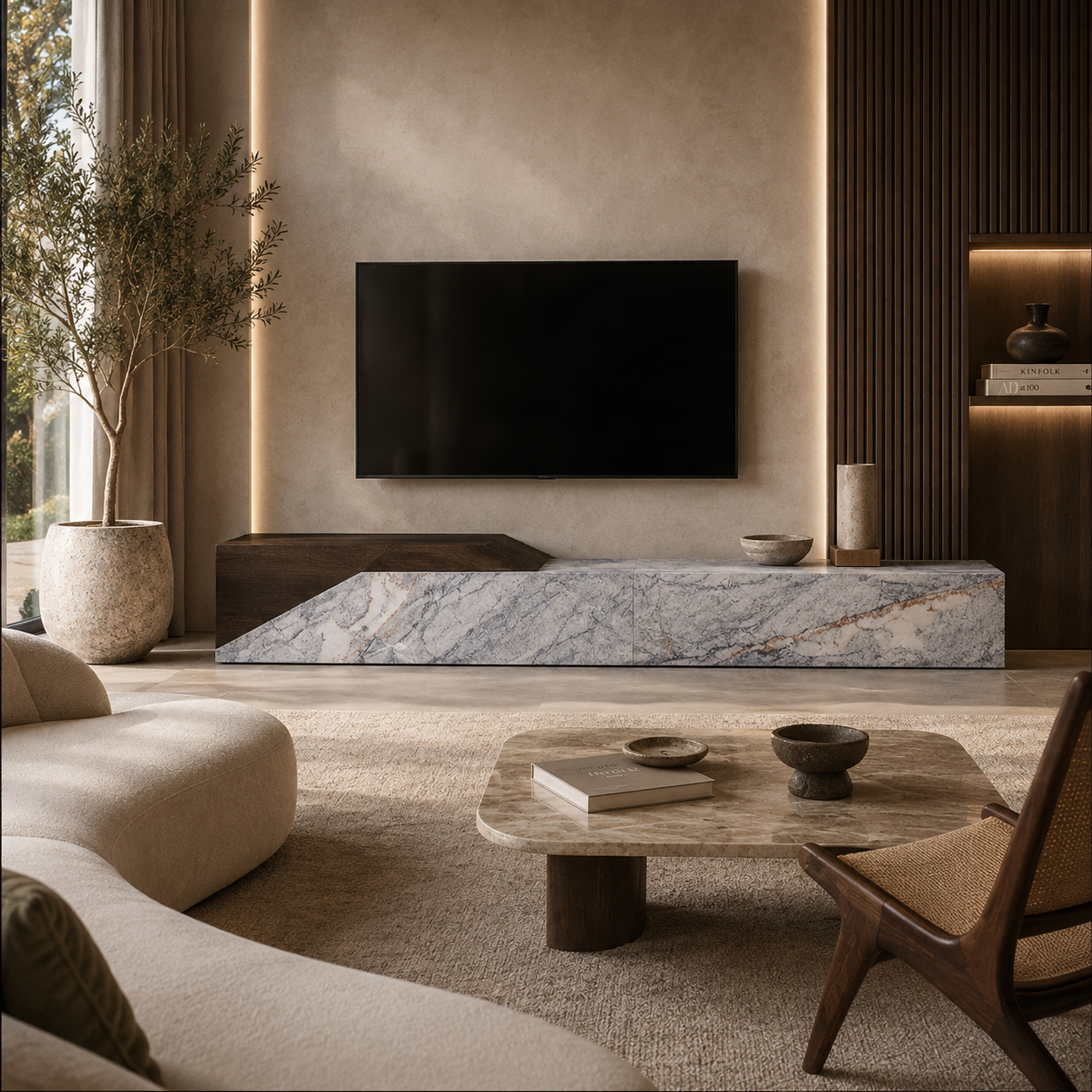
Marble and wood are very different materials, but that's precisely why they can work so well together.
One brings natural veining and pattern; the other introduces grain, texture and warmth.
The key isn't making everything match.
Don't try to match every natural material
Natural wood varies in grain and tone. Marble varies in veining, markings and colour.
Trying to find an exact match between different pieces can therefore be both difficult and unnecessary.
Instead, look at how the overall tones work together.
Pay attention to what's already in the room
Flooring is a useful starting point because it covers such a large area.
Look at the colour of timber flooring, stone, tiles and large upholstered furniture before introducing another significant material.
The aim isn't to repeat those finishes exactly, but to understand the palette you're adding to.
Use contrast deliberately
Contrast can help each material stand out.
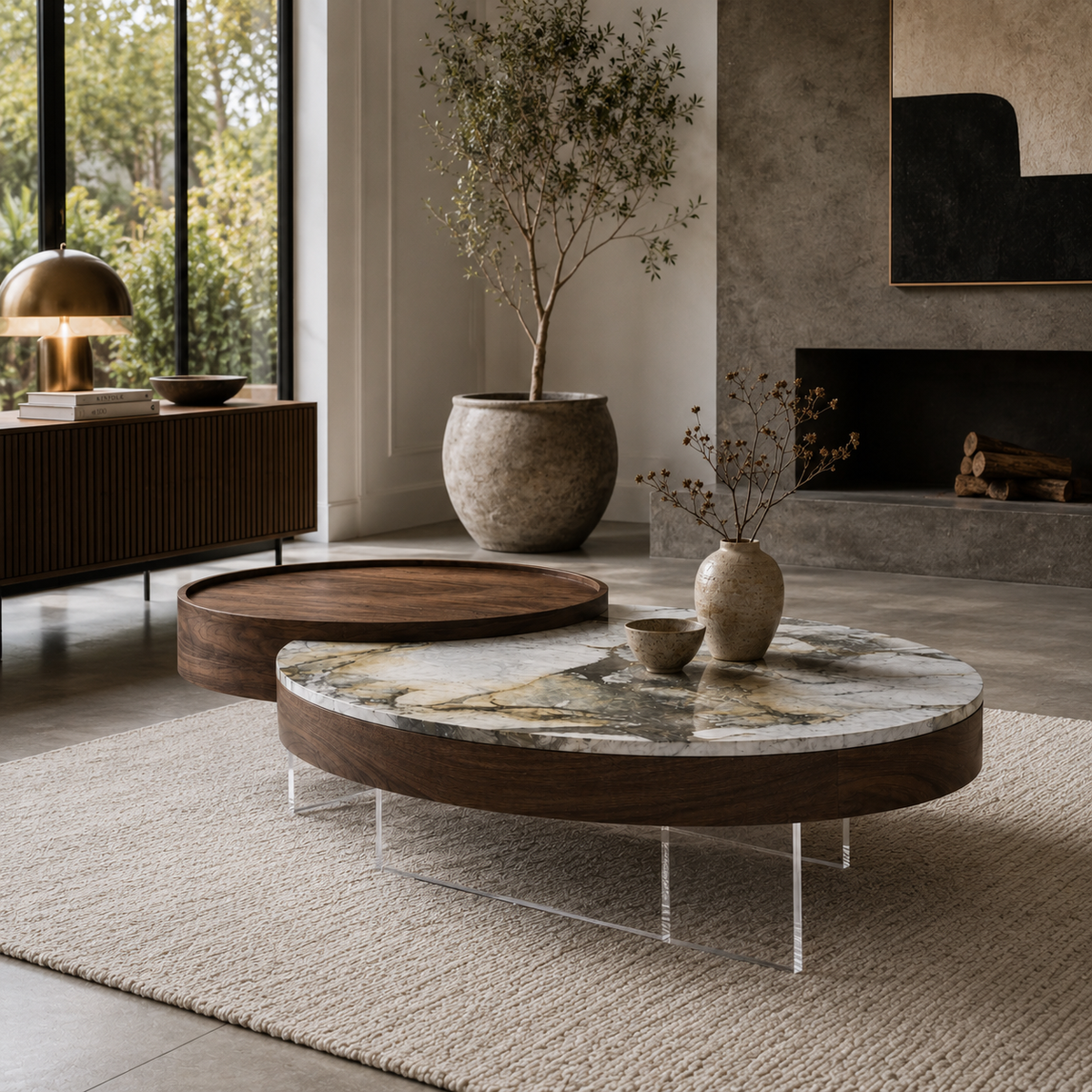
Dark timber against pale marble creates a clear distinction between the materials, while warmer woods can soften strongly patterned stone.
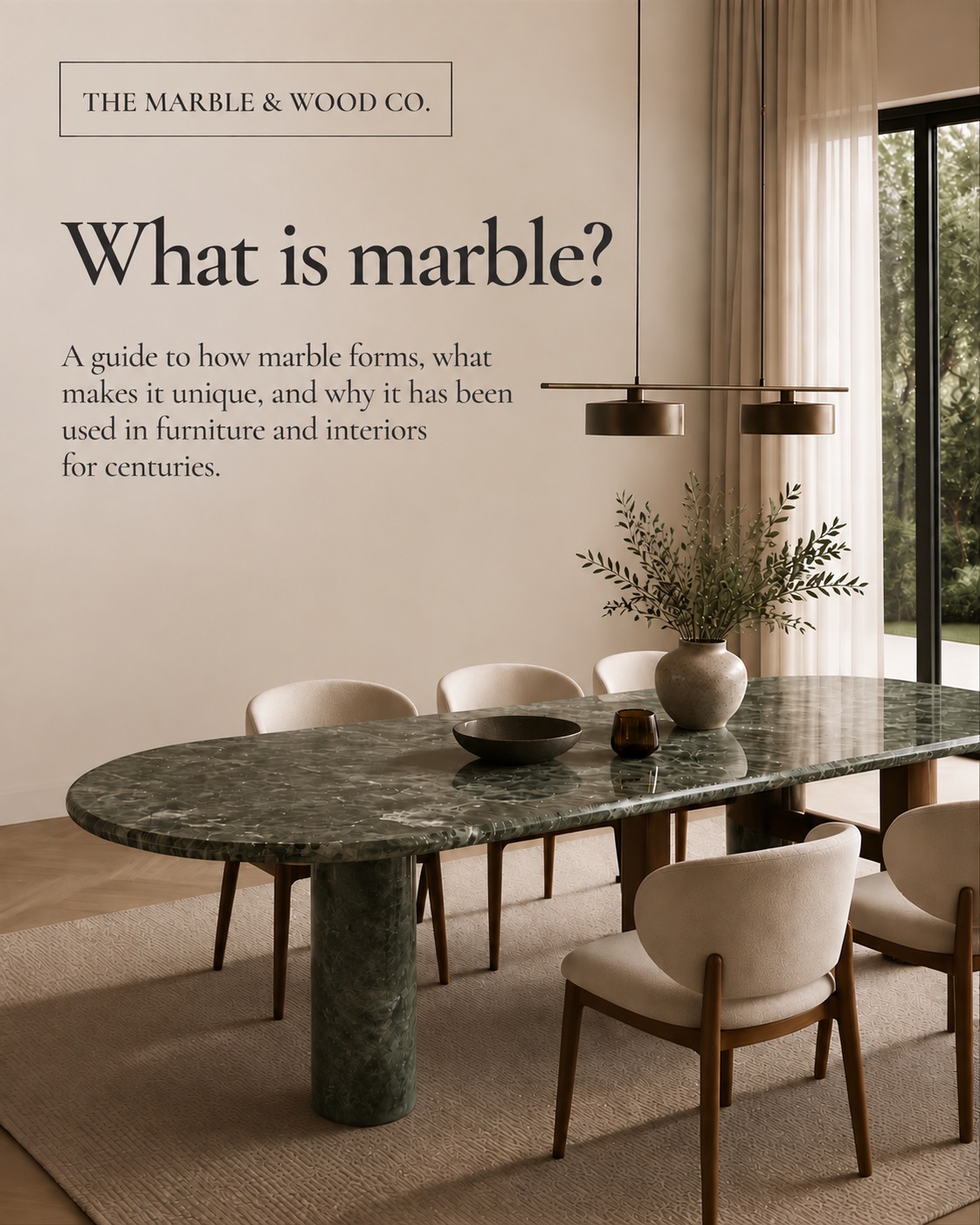
Green or darker marble can introduce a more pronounced colour element alongside relatively neutral timber.
Let one material take the lead
Not every room needs equal amounts of marble and wood.
A large marble dining table might be the dominant material, with wood introduced through smaller furniture or surrounding details. In another room, timber may already be prominent and a marble coffee or side table can provide contrast.
This can feel more natural than trying to distribute both materials evenly.
Allow natural variation to do its job
Perhaps most importantly, don't expect natural materials to remain visually identical from one piece to another.
Different grains, veins and markings are part of what gives marble and wood their character.
A room can still feel cohesive without every natural surface matching perfectly.

Leave a comment
This site is protected by hCaptcha and the hCaptcha Privacy Policy and Terms of Service apply.