
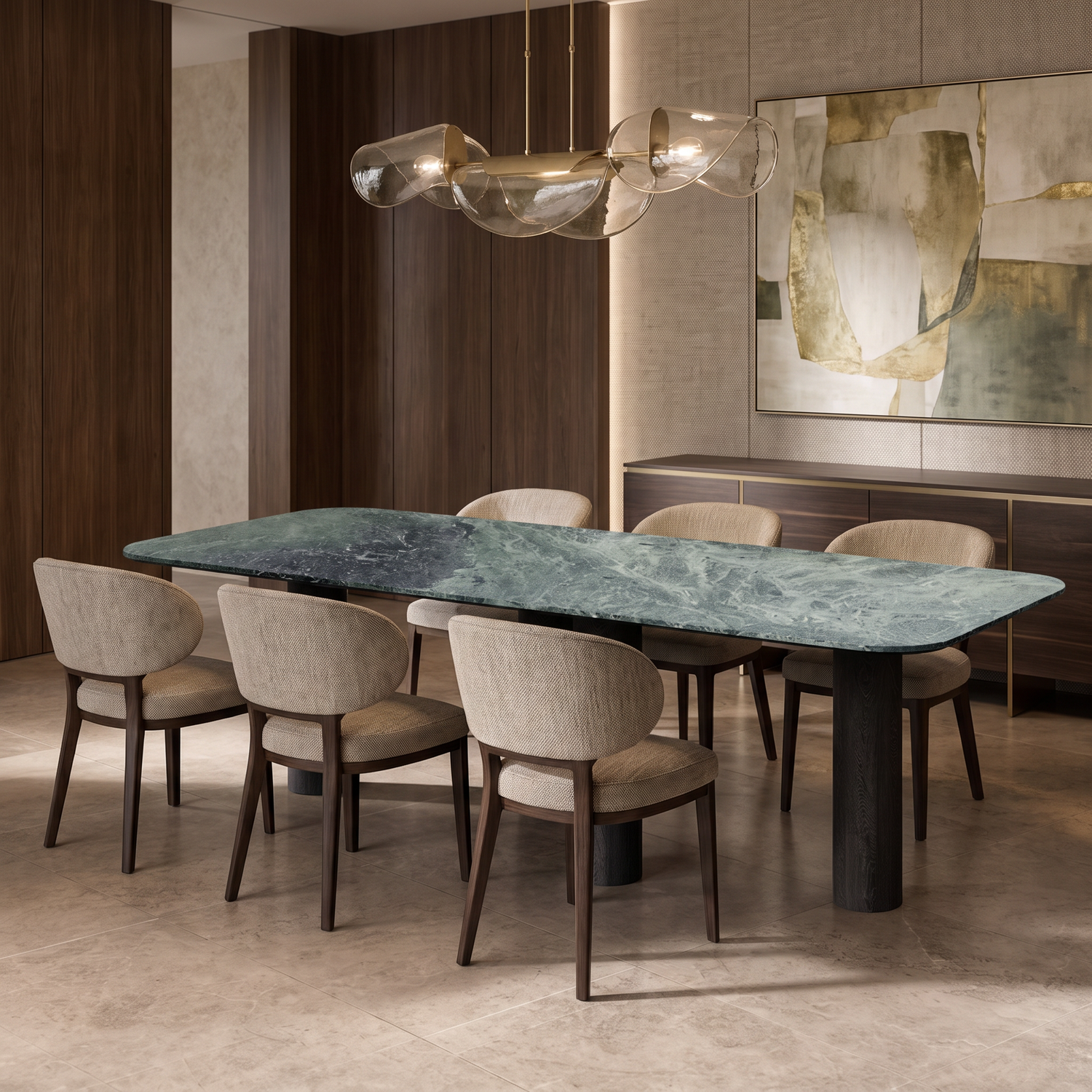
Choosing a dining table isn't simply a case of finding one that physically fits inside the room.
You also need enough space to use it comfortably.
Measure the available space first
Start by measuring the area where you intend to position the table.
Don't rely on the room's overall dimensions. Alcoves, doorways, radiators, kitchen units and other furniture can all reduce the usable floor space.
Marking the proposed table dimensions on the floor can help you understand its actual footprint before ordering.
Allow room for the chairs
The table is only part of the space you'll need.
Dining chairs extend beyond the edge of the tabletop when they're being used, and people need enough room to pull them out and sit comfortably.
Consider this additional space on every side where seating will be positioned.
Think about movement around the table
Look at how people move through the room.
If the dining area sits between frequently used doorways or connects the kitchen and living space, leaving comfortable routes around the furniture becomes particularly important.
A table can technically fit within a room while still making the space difficult to use.
Consider how many people you actually seat
Think about everyday use as well as occasional entertaining.
A larger table can be useful if you regularly have guests, but choosing significantly more seating than you normally need can leave the furniture dominating the room for the majority of the time.
Where several sizes are available, compare each option against both your room and how you expect to use the table.
Round or rectangular?
Room shape can also influence your decision.
Round dining tables can work particularly well where circulation around the furniture is important, while rectangular tables often make good use of longer dining spaces.
Neither shape is automatically better. The right choice depends on the room, seating requirements and how the surrounding space is used.
Check access before ordering
Finally, don't forget the journey into the room.
Measure relevant doorways, hallways and staircases and consider any tight corners the furniture will need to pass through.
This is particularly important with substantial dining furniture.

Leave a comment
This site is protected by hCaptcha and the hCaptcha Privacy Policy and Terms of Service apply.